Team
Project Name

01
OVERVIEW
Game Launcher originally helped Galaxy users organize their installed games and access gameplay-related features more conveniently.
This project focused on the product’s evolution into Samsung Gaming Hub — expanding its role beyond post-install utility and redefining it as a broader gaming experience centered on discovery, access, and play.
As part of that transformation, cloud gaming was explored not as a standalone feature, but as a key enabler of the new product vision.

My Role
Product Planning
Concept Development
UX/UI Planning
Research- and data-driven user needs identification, cloud gaming concept and target scenario definition, Instant Play-focused UX flow design, content structure improvement for the Gaming Hub transition, and launch QA support
The Team
Samsung Gaming Hub
Timeline
2022 – August 2023; Rolling out, launched in the U.S.
02
BACKGROUND
Started Rethinking Game Launcher
The Utility Trap: Limiting Game Launcher to an Installed-Game Organizer
As mobile gaming continued to grow, the limitations of Game Launcher’s original role became more visible.
While useful for managing installed games, it offered little support at the earlier stage of the journey, when users were still deciding what to play.
The Streaming Revolution: A Market Shifting to Instant Access
At the same time, digital services across other categories were shifting toward instant access through streaming.
Meanwhile, mobile games still relied on traditional app-store flows that required download, storage, and upfront commitment before play could begin.
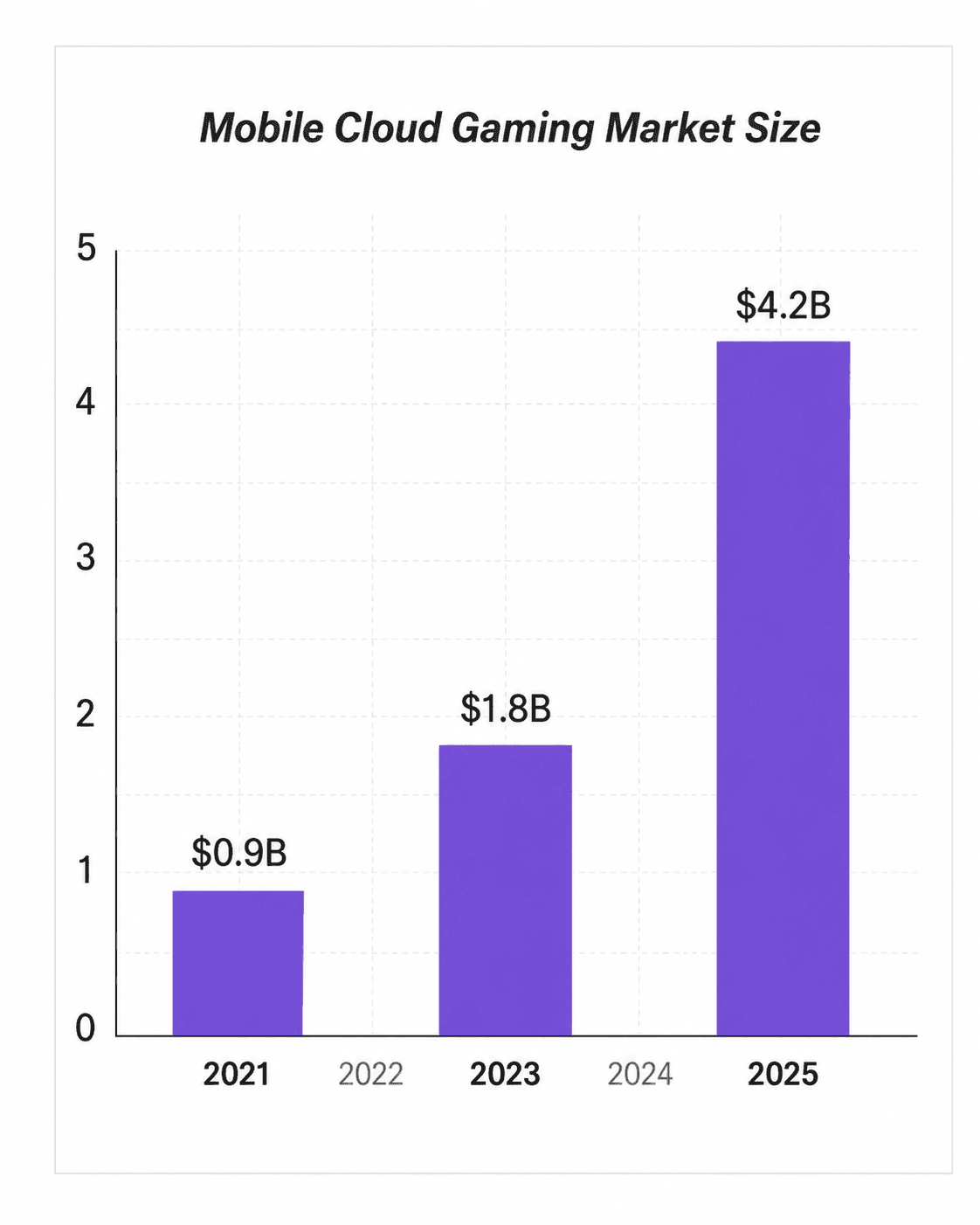
Mobile cloud gaming was growing fast, signaling a shift toward instant access
Problem Framing
Shifting the Paradigm: From Recommendation Hub to Access Layer
Game Launcher was useful for managing games that had already been installed.
However, it did not solve the most critical moment in the journey: the transition from “What should I play?” to “Play now.”
Friction Before First Play
Between discovery and first play, users still faced multiple layers of friction:
Download time
Storage limitations
Device performance concerns
Psychological burden before trying the game
Strategic Insight
Missing Value
The missing value was not better discovery, but immediate access.
For Game Launcher to grow, it could not remain an app-store-style recommendation hub. It needed to become an access layer that connected user interest directly to gameplay.
Role of Cloud Gaming
Cloud gaming was valuable in that context because it could close the gap between curiosity and play.
More than a feature addition, it became a strategic way to redefine Game Launcher as Samsung Gaming Hub.
03
EARLY CONCEPT VALIDATION
Before moving into solution planning, we validated whether the Samsung Gaming Hub concept resonated with Galaxy smartphone users.
The study aimed to understand
(1) current mobile gaming behaviors
(2) awareness and usage of Cloud Game streaming
(3) which value propositions most effectively drive adoption and sustained use.

Research Scope & Audience
All Samsung Smartphone Mobile Gamers (USA)
976
Age Ranges
13-59
Female
51%
Male
48%
What We Tested
What we tested
We introduced a “Mobile Gaming Hub” concept—making game discovery and instant play feel as easy as streaming video.
How we evaluated it
We asked users how the concept felt:
Is it appealing and different?
Does it solve a real need?
Would you actually use it?
Value Propositions Evaluated
We tested which benefits matter most, especially:
Instant Play (no downloads/updates)
Storage Relief
Try-before (trial before download/purchase)
Lower spec barrier (high-end games without a flagship phone)
User Painpoints

“I do not know what mobile cloud game streaming is / never heard of it before today”
“Because I won't have to download the games, when I download too many games it makes my phone slow and acts up.”
“I always have low storage so I have to pick and choose games I need to delete and most of the time I really don't want to delete any.”
Key Findings & Implications
Adoption Drivers: Users are motivated by practical value, not novelty
In the research, users responded to cloud gaming less as a novel technology and more as a way to remove everyday friction.
The most compelling drivers were Instant Play (no download), Storage Relief, Try before commit, and Reduced device-spec barriers.

Implication
The MVP and launch experience should lead with these clear, practical benefits (messaging + key flows), rather than positioning cloud gaming as simply “innovative.”
Awareness Gap: Cloud gaming exists, but many users don’t understand it
27% already use cloud game streaming, while 29% don’t know what cloud streaming is.
Implication
There is a clear early-adopter base, but broader adoption depends on education and trust-building UX—clear explanations, expectations, and data/Wi-Fi guidance.
Usage Context: Gaming is mostly at home, with longer sessions
Mobile gaming happens primarily at home (73%) vs. on-the-go (27%).
Typical play sessions cluster around 30 minutes to 3 hours.
Implication
Gaming Hub should support more than quick access.
Since mobile gaming often happens at home with longer play sessions, the experience needs to help users discover, try, and continue playing games in one seamless flow.
In this context, cloud gaming becomes a low-friction trial layer — allowing users to experience a game instantly before deciding whether to install, save, or keep playing.
04
TARGET AUDIENCE
Only 12% of all Galaxy users actively use Samsung Gaming Hub — these are considered the core gaming audience.
Overall Galaxy User base
Total Galaxy device users: 1.1 billion
Among them, Galaxy Gamers: 600 million (58%)
Samsung Gaming Hub users: 120 million (12%)

Overall Galaxy Users

600M (58%)
Galaxy Gamers
120M (12%)
Game Launcher Users
Primary Target: Core Gamers
Definition:
Plays games for over 100 minutes per week
Has installed more than 4 games
However, a large portion of Galaxy Gamers play under 100 minutes or have fewer than 4 games installed — requiring further filtering.
05
PERSONA
PERSONA 1. Plays in Short Sessions on the Go

Name: Ethan
Age: 28
Job: Software Engineer
Jinho commutes by bus every morning and evening.
He likes playing mobile games in short bursts during the ride and enjoys trying new games often. He doesn’t want to spend his limited time downloading, updating, or setting things up.
PERSONA 2. Home Long-Session Player (Discovery-Driven)

Name: Emily
Age: 34
Job: Project Coordinator
Sora prefers playing at home and tends to play for long sessions once she starts. She wants to quickly find games that truly match her taste, and she likes trying a game right away to decide if it’s worth her time.
06
USER SCENARIO
How the New Hub Experience Changes the Journey
SCENARIO 1. Commute Quick Play

Launch App
Open Samsung Gaming Hub during a bus commute.

Discover
Browse Instant Play recommendations for a quick session.



SCENARIO 2. Find the Right Game Fast
Launch App
Open Samsung Gaming Hub at home when she has time to play.

Discover
Explore personalized rails (For You / Based on your play history) to find a promising title fast.


07
PRODUCT DIRECTION
Based on the pain points, we defined what the MVP should prioritize.
These priorities became three direction statements that guided our solution and concept planning.

Instant Start
Start playing in seconds with minimal setup.
Lower Device Barrier
Deliver a consistent experience across a wide range of phones.

Try Before Commit
Try first, then decide to install or purchase.
08
SOLUTION
Rebranding Game Launcher to Samsung Gaming Hub
We expanded Game Launcher from an installed-games organizer into a hub where discovery and play happen in one place—a single destination that brings users closer to games, not just their library.

Game Launcher

Gaming Hub
Introducing Cloud Gaming as “Instant Play”
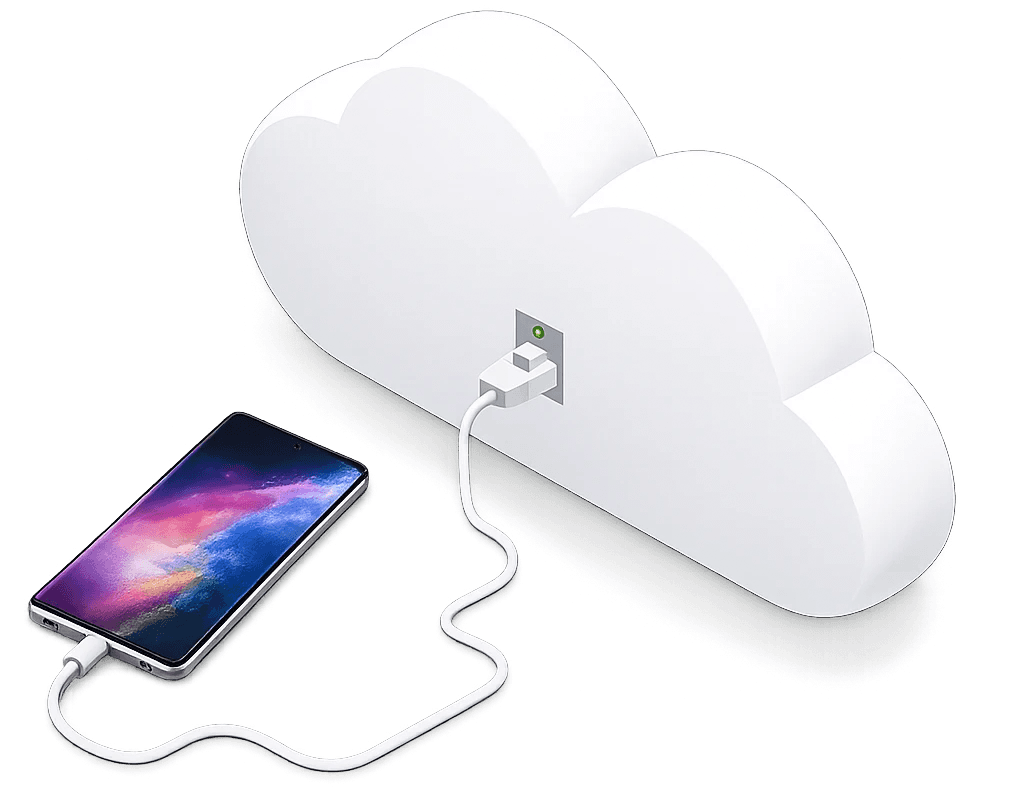
We introduced Mobile Cloud Gaming as Instant Play—a new way to launch games without the usual setup steps.
By reducing install, storage, and device-spec dependency, users can start a session immediately whenever they have an internet connection.
Stronger Personalized Game Discovery
We strengthened discovery using Game Launcher signals—play history, preferred genres, and playtime patterns—so users can find relevant games faster through more personalized recommendations.

09
REBRANDING THE EXPERIENCE
BI Grid & Spacing
BEFORE

AFTER

Before & After Comparison

Game Launcher
Designed as a utility for organizing installed games in one place.
Helped users manage playtime, notifications, profiles, and gameplay settings.
Improved the gaming experience after download through control and optimization features.
Delivered value mainly after a game had already been installed.

Gaming Hub
Expanded the service from game management into a broader gaming destination.
Shifted focus toward discovering new games and accessing them more easily.
Introduced a more immediate entry point through features like Instant Plays.
Extended the experience beyond installed games to include discovery, access, and broader gaming content.
10
ENABLING INSTANT PLAY
Instant Play is Samsung’s Mobile Cloud Gaming concept for turning game discovery into immediate play.
We approached it not as a streaming feature, but as a strategic access layer that removes the friction between interest and action — eliminating the need to download before a user can meaningfully try a game. In that sense, Instant Play represented a shift from managing installed games to enabling play on demand.

Original UA Flow


New UA Flow


This comparison revealed that the key friction was not discovery, but delayed access to play. In the traditional UA flow, users had to pass through multiple install-related steps before they could even try a game, creating several points of drop-off after initial interest.
Instant Play addressed this by replacing the install path with a click-to-play streaming flow. I viewed this not as a feature-level improvement, but as a strategic shift in how Gaming Hub could connect user intent to gameplay more immediately.
Instant Play User Flow

Instant Play Wireframe


Strategic Value Across the Ecosystem

For Users

For Game Partners

For Samsung
11
EXPANDING DISCOVERY
Helping users find the right game, not just more games

Key Insights
12
FROM STRATEGY TO UX
After defining the opportunity for Cloud Gaming, the next challenge was turning that strategy into a usable experience. We focused on how Gaming Hub could support a smoother path from discovery to play by rethinking content structure, entry models, and the interaction flow around instant gameplay.


Experience Principles
The UX work was guided by three principles: frictionless access, play-first design, and easy discovery. Rather than treating them as abstract guidelines, we used them to shape the content structure, define entry models, and create a faster path from browsing to gameplay.
Play-First

Frictionless Access
Easy Discovery
Content Structure & Navigation
The home screen was structured to help users discover new cloud games, start playing instantly, and easily return to games they had already played.
01. Hero Banner Area
The top area of the home screen features cloud games and promotional content in a prominent banner format. Each game banner includes a clear Play button, allowing users to start a game immediately once they find something interesting.
02. Swipe-Based Browsing
The main banner area uses a swipeable carousel structure, allowing users to browse multiple cloud games without scrolling deeply. This creates a lightweight discovery flow where users can quickly compare and choose games.
03. Personalized Game Recommendations
Below the main banner, recommended games are surfaced based on the user’s play history and behavioral data. As more usage data is collected, the recommendation experience can better reflect each user’s preferences and play patterns.
04. Persistent My Games Area
A fixed My Games area at the bottom displays games the user has previously played. This helps users return to familiar titles quickly while continuing to explore new games on the home screen.

Content Type Indicators
We identified the need for a lightweight icon system to differentiate install-based games, HTML5 games, and Instant Play titles, so users could better understand how each game would launch and what level of commitment it required.

13
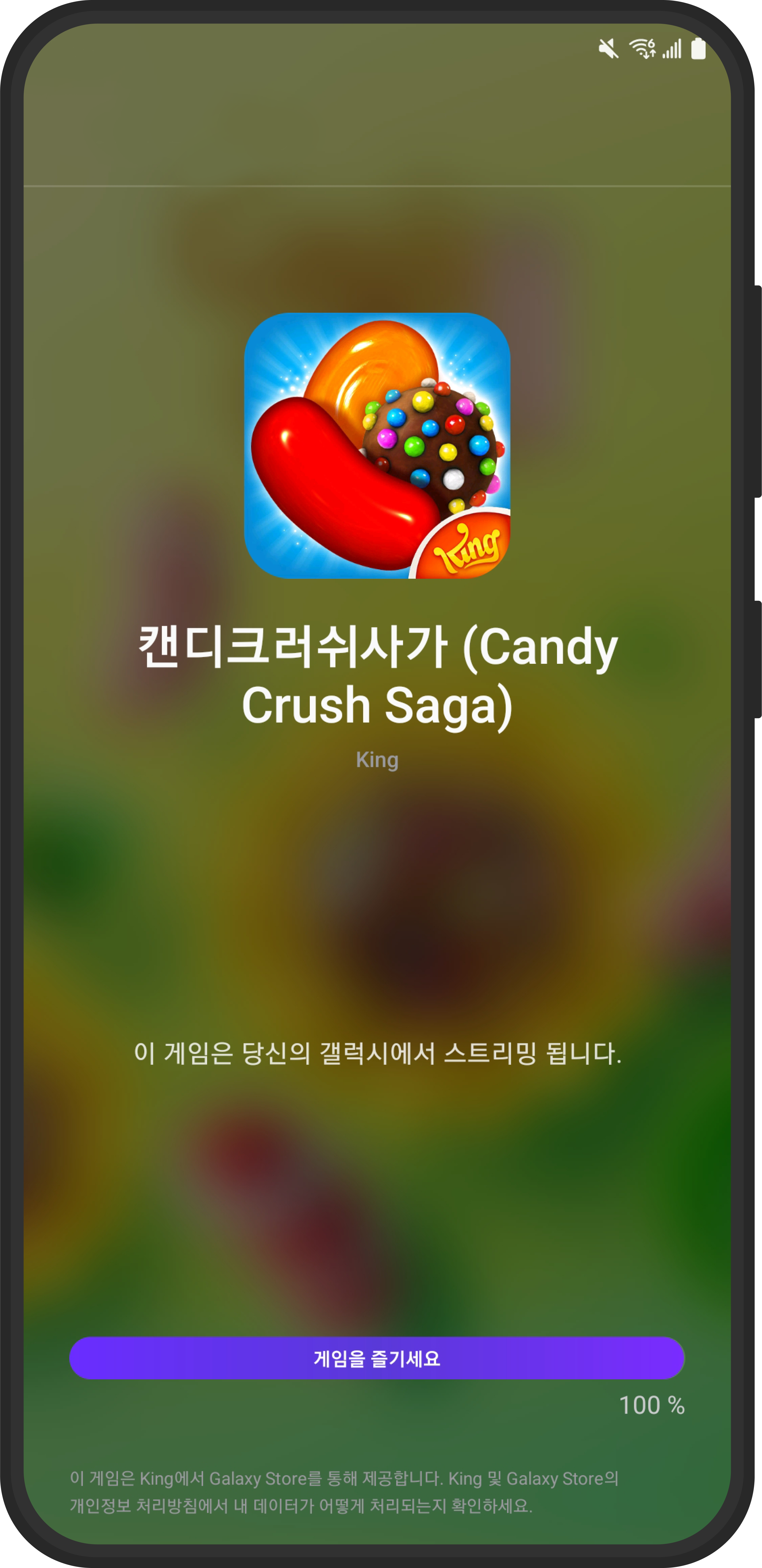
FINAL PRODUCT




13
POST-LAUNCH VALIDATION
Conducted by Samsung in partnership with UserTesting to evaluate the updated Gaming Hub 2.0 Cloud Gaming experience.
Research Scope & Audience
What We Tested
What we tested
Real-world conditions tested
How we evaluated it
Key Findings

Instant access resonated strongly
Users clearly valued being able to try games without downloading or giving up storage.
Performance mattered more than visual polish
Minor graphics compromise was acceptable, but lag had a much bigger effect on quality perception.
Discovery needed more precision
Category browsing worked, but users still wanted search, filtering, and better personalization.
Content strategy still mattered
The catalog felt broad, but not always deep or compelling enough for users seeking more complex games.
13
REFLECTION
During my time on the Game Launcher team, I worked closely with PMs to understand user needs and explore how the service could better address them. The process was never just about adding features. It was about understanding why users came to the product, what kind of experience they expected, and what kinds of changes they would be willing to embrace.
Among those efforts, the rebranding of Game Launcher into Gaming Hub required a different level of judgment. Because users already saw Game Launcher as a tool for managing installed games, we had to think carefully about how to introduce a new direction without losing that familiarity. The question we returned to most often was: why would users choose cloud gaming? We kept examining how such a major shift would be received, and whether it could deliver meaningful value in actual use.
This project was especially challenging because Game Launcher served a broad and varied user base with different goals, habits, and expectations. The content mix and platform policies also differed between Korea and the U.S., making consistency across markets another important consideration. There was no simple answer that could satisfy every user, but that complexity made the project more valuable from a product perspective.
Looking back, I see this project as an important first step rather than a finished answer. It left open questions and future opportunities, which is part of why it has stayed with me. Since I left the company after this project, it also carries a personal sense of incompletion. Still, it taught me the importance of asking the right questions when guiding users through change, and of thinking carefully about the relationship between product direction, user value, and adoption.
- Thank you -